Series, FMS Career Track
The Road to FMS Certification: How to Become a Certified Defense Sales Agent
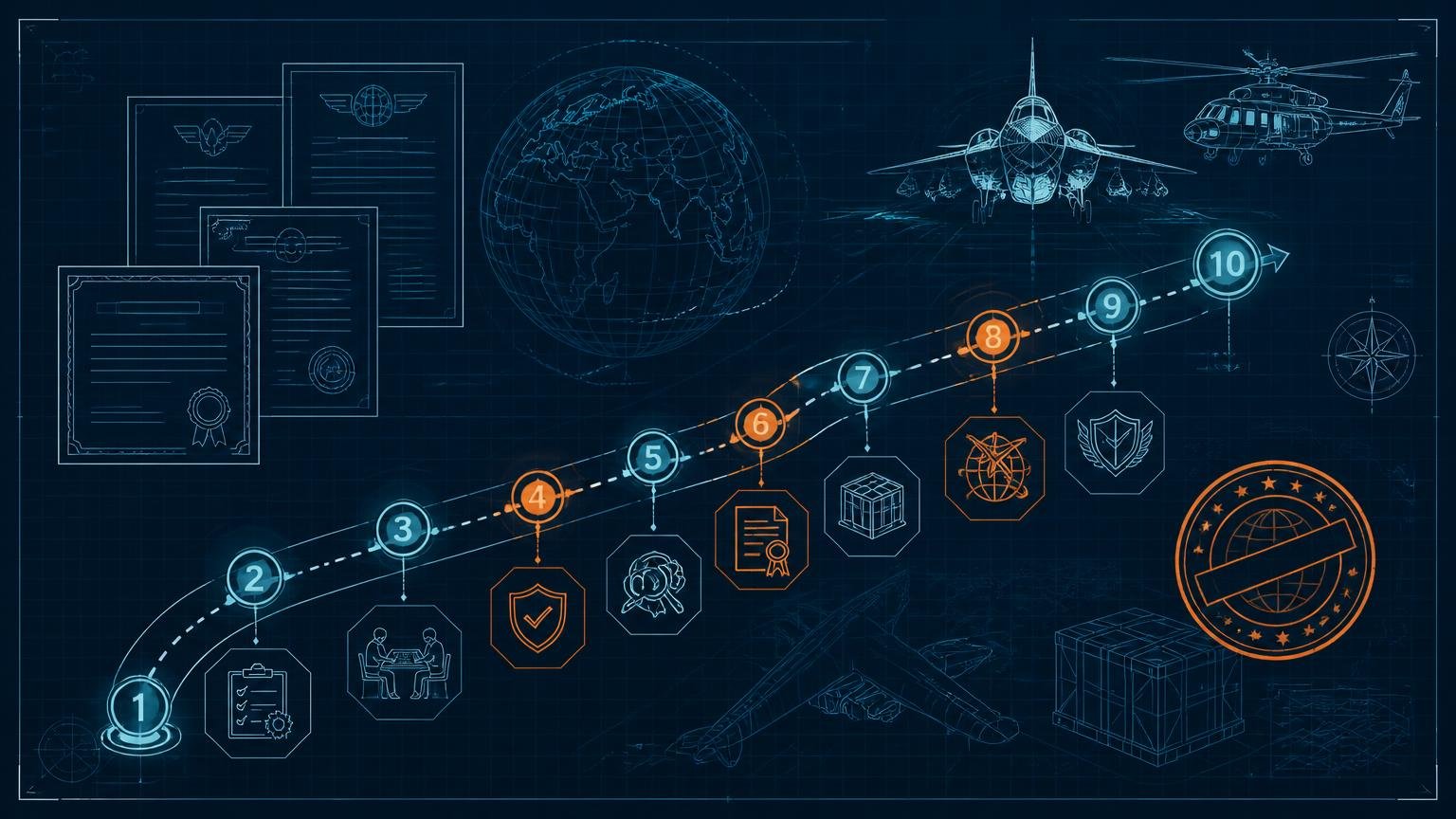
Everyone wants the outcome: allied-nation programs, global travel, and top-decile earnings. Fewer people know the actual path. There is no single exam that makes you an 'FMS certified' agent, there is a stack of credentials, clearances, and demonstrated case experience that together make a government or an OEM trust you with controlled defense articles. This is that stack, in order, with realistic timelines.
What 'FMS certified' actually means
There is no single license labeled 'FMS agent.' What the market recognizes is a combination: formal security cooperation training (DSCA / DISCS courses, DAU International Acquisition certification paths), demonstrated command of the Arms Export Control Act and its implementing regulation the ITAR (22 CFR 120-130), the EAR where dual-use items apply, and a track record inside real cases.
On the commercial side, the equivalent credential is your firm's DDTC registration plus your standing as an empowered official or as a consultant working under one. Buyers do not audit your certificate frame, they audit whether your paperwork survives review. Certification is the shorthand for 'this person will not get our program held at the license desk.'
Step 1: Eligibility and US person status
Almost all ITAR-controlled work requires US person status (citizen, lawful permanent resident, or protected individual). Confirm this first, because it gates everything downstream, including access to controlled technical data on a shared drive.
If you are not a US person, there is still a real path in DCS support, offset development, and partner-nation-side representation, but the role and the compensation model differ. Be clear about which side of the line you are on before you invest in training.
Step 2: Start the clearance path early
A Secret clearance is the practical floor for FMS program work; Top Secret opens ISR and classified sustainment discussions. Clearances are sponsored by an employer, not purchased individually, so the fastest route is to join a cleared firm in a supporting role, proposal, program control, compliance, logistics, and let the investigation run while you learn the business.
Budget six to twelve months for a Secret investigation and adjudication. Clean finances, honest disclosure, and continuous employment history matter far more than the paperwork itself.
Step 3: Foundational security cooperation training
The core curriculum is public and reachable: DISCS (Defense Institute of Security Cooperation Studies) offerings such as the Security Cooperation Management courses, DAU International Acquisition Management modules, and DSCA's Security Assistance Management Manual (SAMM) itself, which is free and the single best self-study document in the field.
Read the SAMM cover to cover once, then keep it as a reference. If you can explain case financial management, pseudo-LOAs, and case closure without opening a browser, you already outperform most sellers in the room.
Step 4: Build ITAR and EAR licensing fluency
Learn the USML categories that map to your portfolio, Category VIII for aircraft, XI for electronics, XII for optics and sensing, and learn which items fall under the EAR's Commerce Control List instead. Then learn the instruments: DSP-5 for permanent hardware exports, DSP-73 for temporary exports, DSP-61 for temporary imports, TAAs and MLAs for technical data and manufacturing know-how.
Practical fluency means knowing what a complete license package looks like: end-user statement, DSP-83 non-transfer and use certificate where required, purchase documentation, and technical description. Formal ITAR training from a recognized provider (ECTI, SIA, or an in-house compliance program) is worth the tuition here.
Step 5: Get inside real cases
Credentials without case experience read as theory. Get onto a live pursuit and follow it end to end: Letter of Request intake, requirement shaping, pricing and availability data, LOA development and countersignature, implementation, delivery, and case closure or amendment.
Two or three completed cases teach you the timing instincts that no course transmits, when a partner nation's fiscal year forces a decision, when congressional notification thresholds change your schedule, when a transportation plan needs to be rebuilt because a port closed.
Step 6: Master FCPA and agent due diligence
International defense sales run on representatives and agents, and that is exactly where careers end badly. Learn the Foreign Corrupt Practices Act, the ITAR Part 130 political contributions and fees reporting rules, and your firm's third-party screening process.
The discipline is simple and non-negotiable: document every relationship, screen every intermediary against denied-party lists, keep commissions transparent and reportable, and walk away from any deal that requires you not to look closely at something.
Step 7: Your first captures
Start where the requirement is urgent and the competition is thin: sustainment, mission kits, sensor upgrades, SAR equipment, spares pipelines. These are smaller cases with real deadlines, which means faster reps and faster learning.
Build a contingency habit from case one. Every proposal you deliver should carry a primary sourcing path and at least one alternate with its own compliance route. That single habit is what converts a competent agent into a trusted one.
Timeline, cost, and payback
A motivated professional entering from adjacent aerospace, logistics, or government service can be credible in twelve to eighteen months and certified-and-clearance-ready in about two years. Direct training cost typically runs a few thousand dollars; the larger investment is the time spent inside cases.
The payback is disproportionate. Certified FMS consultants operate in a market with few qualified competitors, long customer relationships, and capture incentives layered on base compensation. One completed aviation case can outweigh several years of ordinary commercial sales commission.
Common disqualifiers, and how to avoid them
The recurring failures are predictable: undisclosed foreign financial ties that stall a clearance, informal commission arrangements that violate Part 130 reporting, sloppy handling of controlled technical data over personal email, and promising a delivery schedule that no license timeline can support.
Avoid all four by making compliance a selling feature rather than an obstacle. Customers trust the agent who tells them what will take ninety days and why.
Your first 12 months with our partner network
New certified partners at Higher Solutions Defense start paired with an existing case lead, work the RFQ ledger for qualified partner-nation requirements, and take ownership of a portfolio segment, rotary-wing and SAR aviation, ISR and counter-UAS, or robotics and autonomous systems, within the first two quarters.
We support certification costs for candidates on the J-109 track and put you on cases that make the credential pay for itself. If you already hold AECA, DSCA, or ITAR credentials, you can skip straight to capture.
Apply to the J-109 certified consultant track
Our premier FMS opening pairs new certified partners with live allied-nation cases, supports certification costs, and pays a capture incentive on top of base.
- Part 1Own the Top 10%: The FMS-Certified Sales Partner Playbook
- Part 2The Road to FMS Certification: How to Become a Certified Defense Sales Agent
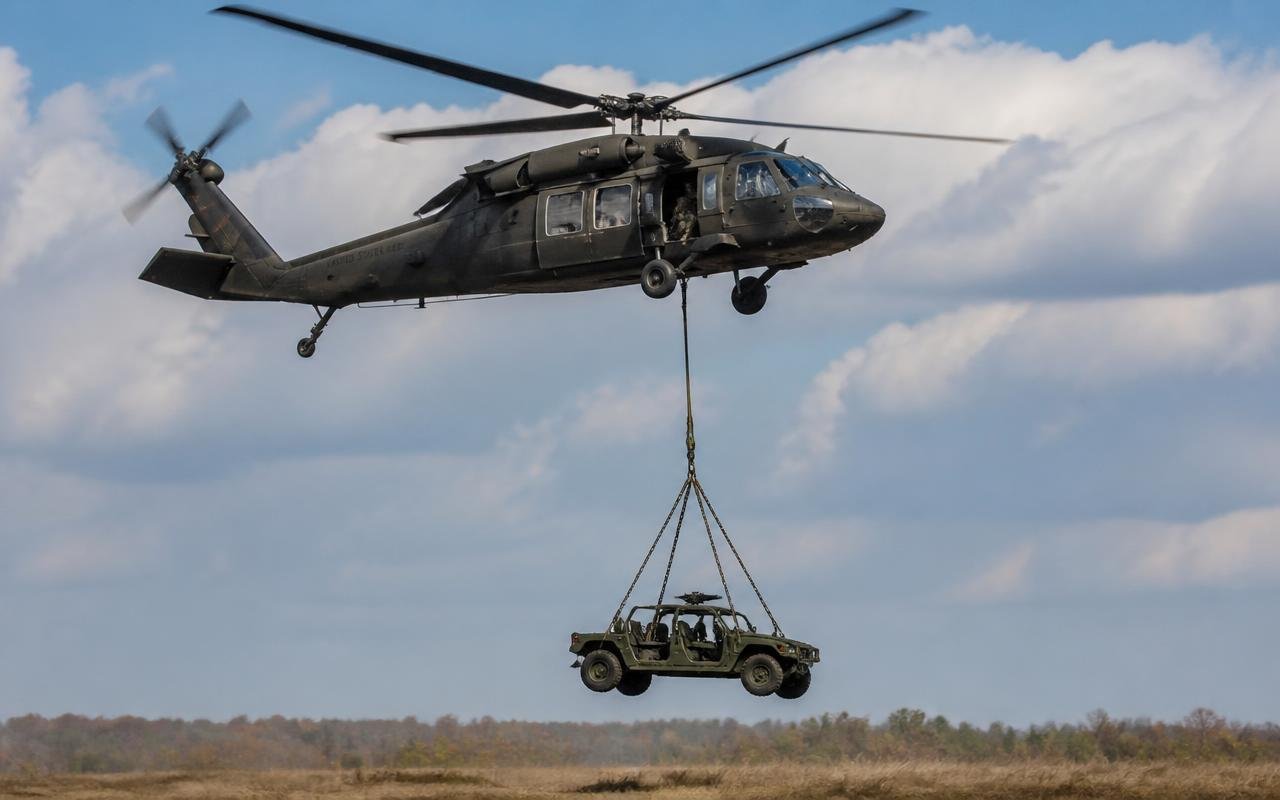
UH-60M Black Hawk Utility Helicopter
A tactical utility helicopter supporting air assault, troop movement, resupply, medical evacuation, and external-load missions.

HS-V40 VTOL Fixed-Wing ISR UAS
Runway-independent VTOL fixed-wing UAS delivering long-endurance EO/IR surveillance and BLOS relay.
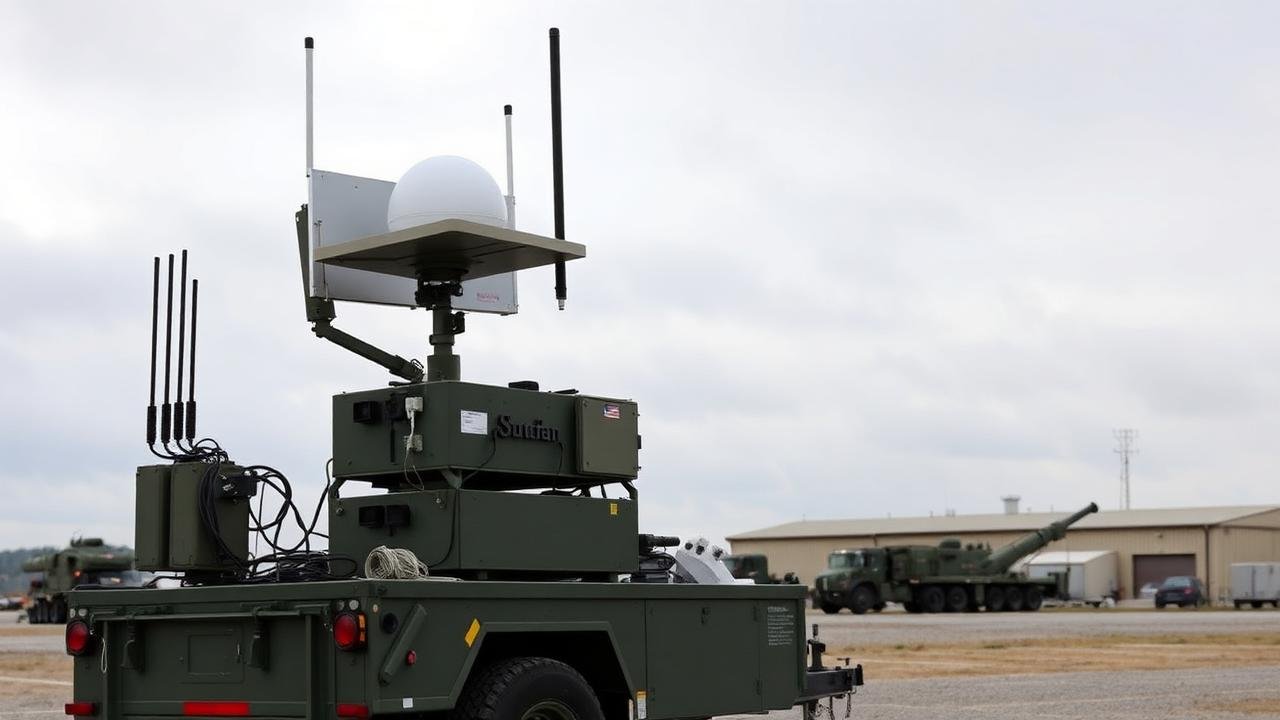
HS-CUAS Sentinel Detect & Defeat System
Trailer-mounted counter-drone system fusing radar, RF, and EO/IR with layered non-kinetic defeat.

HH-60W Jolly Green II Combat Rescue Helicopter
Combat search and rescue helicopter for personnel recovery in contested airspace, with extended fuel and defensive systems.
Edge Data Centers for Drone Communications: Faster, Safer Links
Why a small data center near the mission area improves drone video, AI vision and fleet control, and keeps working when long haul links fail.
RoboticsLightweight Materials, CNC and Prototyping: Building Better Drones
How carbon fiber, printed titanium and CNC aluminum come together in fast prototype loops to build drones and robots that fly longer and last.
RoboticsSecuring Drone and Robotics Factories Against Military Threats
Plants that build drones and robots are high value targets. Here is how planners approach site layout, redundancy and recovery.
RoboticsRobotics for Military and Search and Rescue: Six Real Use Cases
From route clearance to flood rescue, see where ground robots and drones already save lives on missions.