Series, How Technology Is Shaping Warfare
Uncrewed at Sea: Designing a Search & Rescue Fast Interceptor
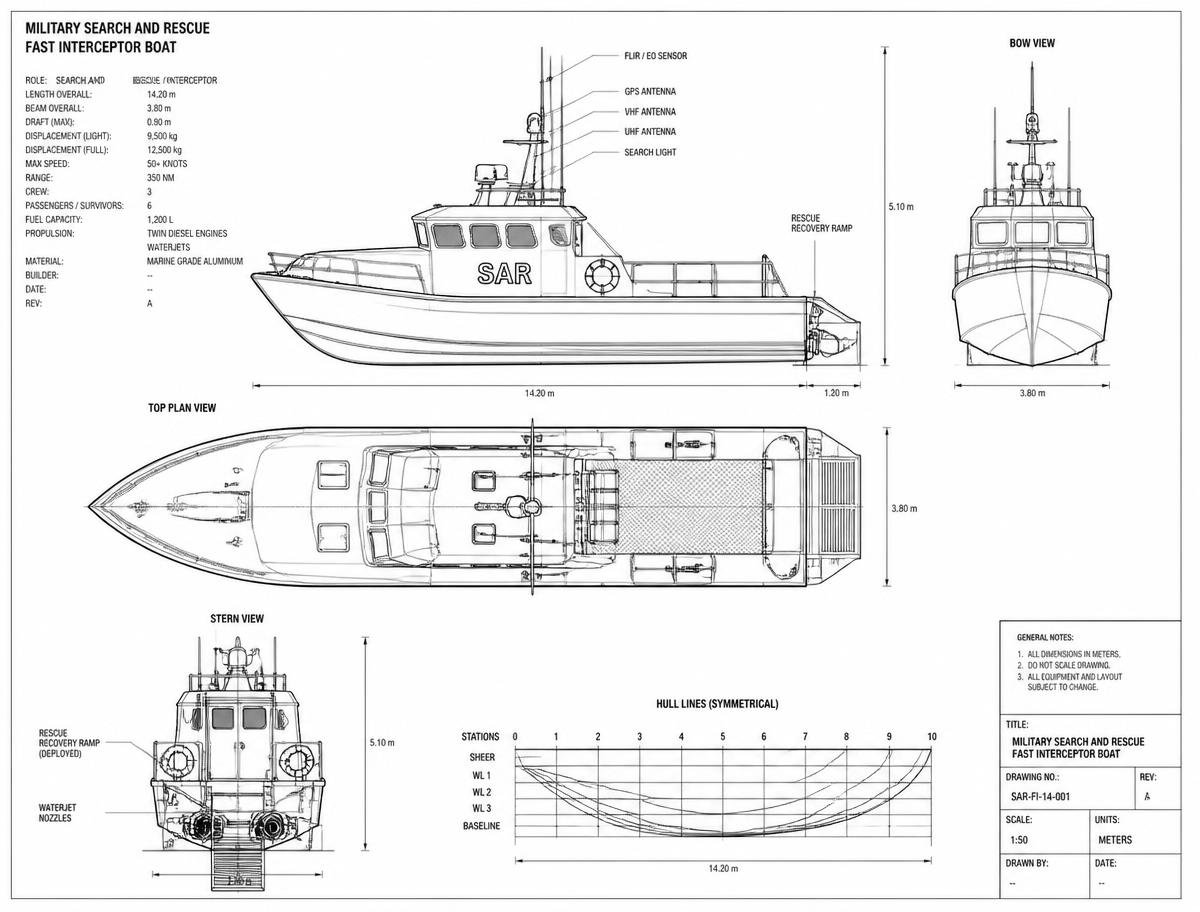
The second study in this series moves the same autonomy question to the water. A 14.2-meter waterjet interceptor is small enough to be launched from a pier or a mother ship, and fast enough to close a distress position before a rotary-wing asset can be spun up.
Hull and propulsion
The deep-V hull carries a sharp deadrise aft to keep the ride survivable at 50-plus knots in a short sea, with spray rails that keep the mast optics clear of water. Twin diesel waterjets remove exposed running gear, critical when the boat is expected to work in debris fields, shallow surf and alongside people in the water.
Range is the design tension. A 1,200-liter fuel load buys roughly 350 nautical miles at cruise, which sets the practical radius of action for an independent search leg before a refuel or a hand-off.
Recovery is the mission, not an accessory
The stern recovery ramp is the reason the aft third of the general arrangement looks the way it does. Recovering an unconscious casualty over a freeboard is slow and injures rescuers; a low transom ramp with a powered lift lets two crew bring a person aboard in seconds and start care on a flat deck.
Deck space forward of the ramp is deliberately unfurnished. Six survivors, a litter, or a stretcher-and-medic pairing all have to fit without reconfiguration.
Finding people: EO/IR, radar and SARSAT
The mast integrates a stabilized FLIR/EO ball for thermal detection of a head in the water at night, a small-target surface radar tuned for returns from liferafts, and VHF/UHF direction finding for 121.5 MHz homing after a 406 MHz COSPAS-SARSAT alert has cued the search area.
Cueing from space, searching from the surface, and confirming with thermal is the same layered detect-identify-act chain used on the land platform in Part I, only the failure mode differs. At sea, the clock is hypothermia.
The uncrewed option
The same hull accepts an uncrewed surface vehicle fit: the helm becomes a control station, and the boat runs autonomous search patterns over a designated box, streaming EO/IR video back over line-of-sight mesh or SATCOM. Crewed boats then get vectored to confirmed contacts instead of burning fuel on empty water.
This is where autonomy earns its place in rescue work. Machines do the search grid; people do the recovery.
- Part 1The Autonomous Battlefield: From Crewed Armor to Robotic Ground Combat
- Part 2Uncrewed at Sea: Designing a Search & Rescue Fast Interceptor
- Part 3Human-Machine Teaming: Autonomy Across Air, Land and Sea
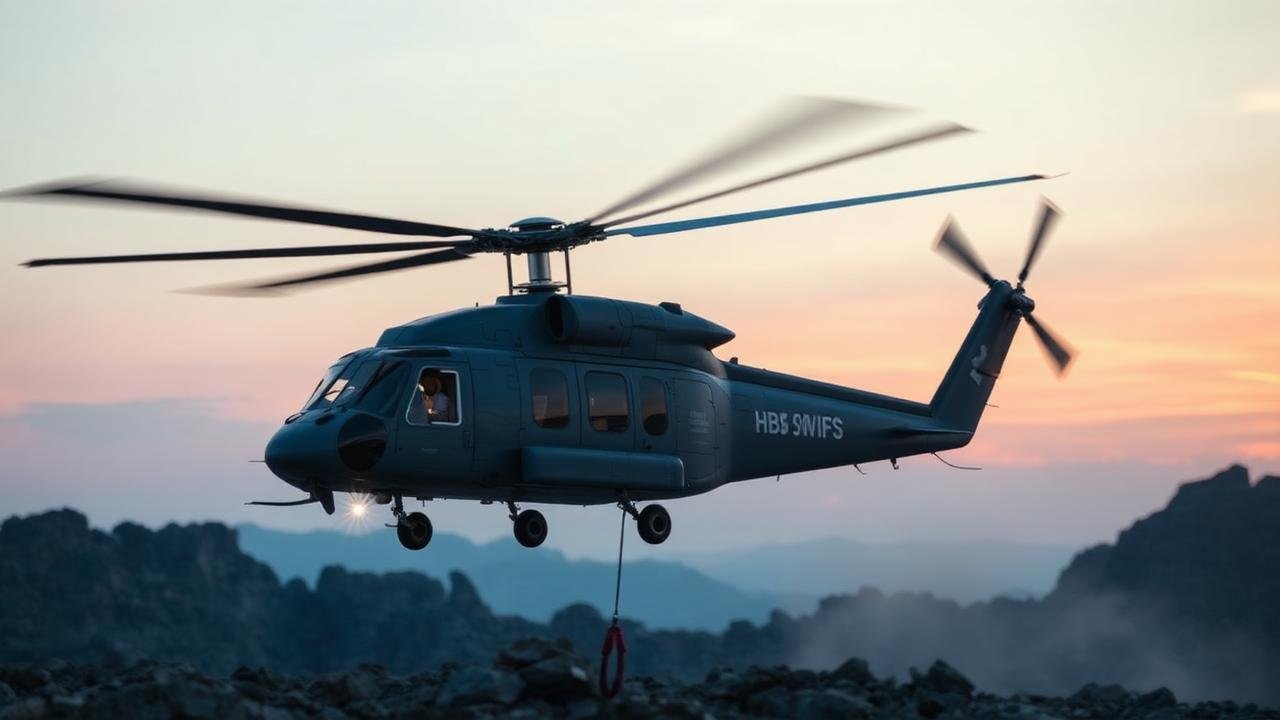
HH-60W Jolly Green II Combat Rescue Helicopter
Combat search and rescue helicopter for personnel recovery in contested airspace, with extended fuel and defensive systems.
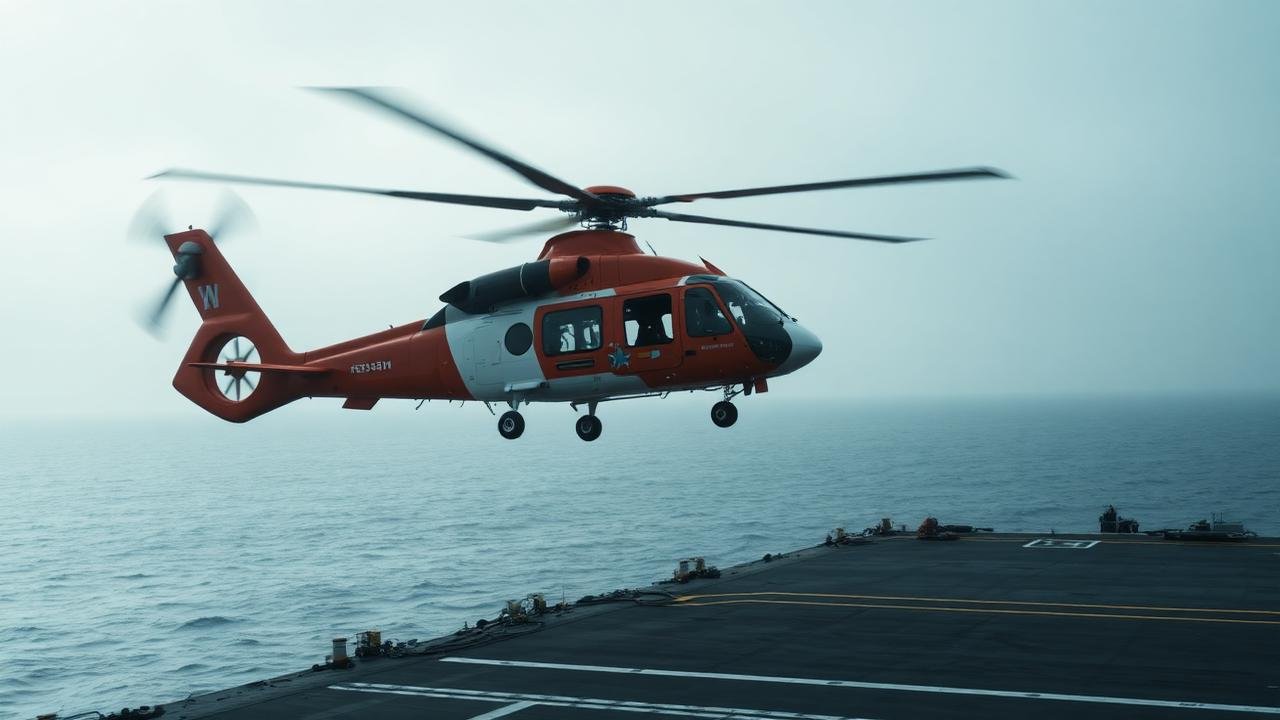
MH-65E Dolphin Short-Range Rescue Helicopter
Compact shipboard-capable rescue helicopter for short-range recovery, cutter deployment, and port security.
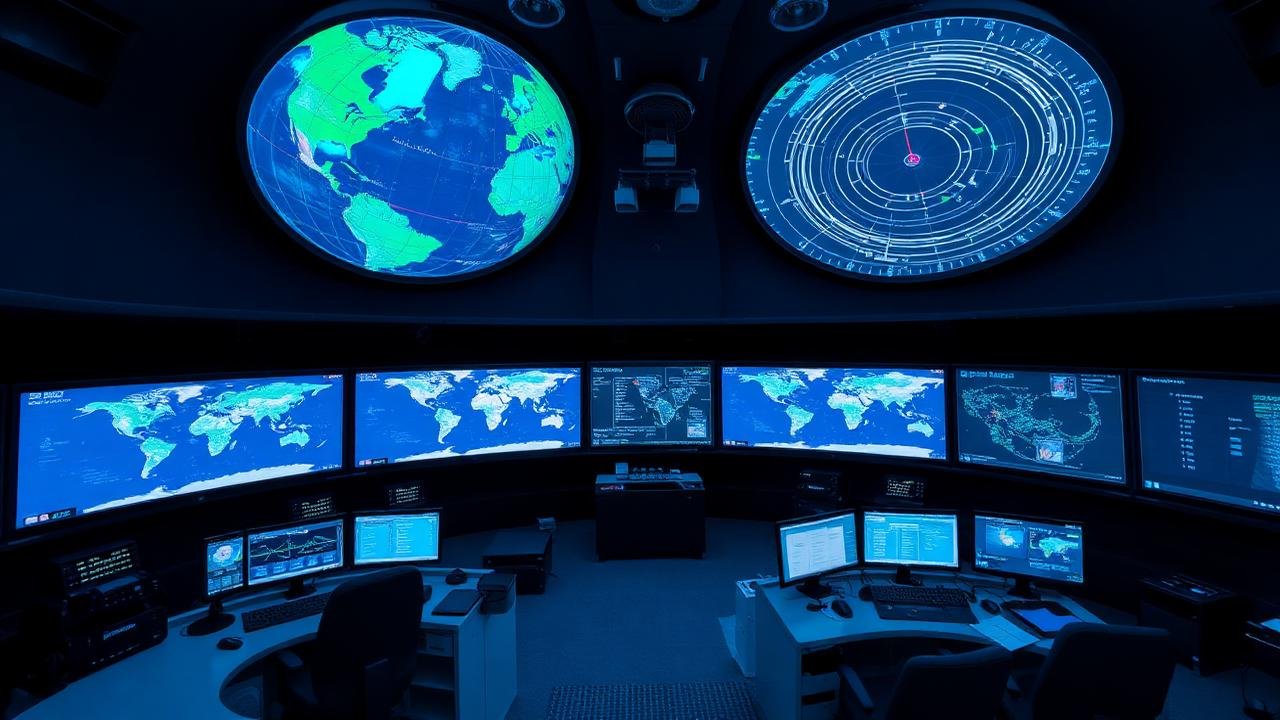
Distress Beacon Monitoring & Satellite Tasking Service
COSPAS-SARSAT compatible beacon detection, alert routing, and satellite imagery tasking for rescue coordination.
Edge Data Centers for Drone Communications: Faster, Safer Links
Why a small data center near the mission area improves drone video, AI vision and fleet control, and keeps working when long haul links fail.
RoboticsLightweight Materials, CNC and Prototyping: Building Better Drones
How carbon fiber, printed titanium and CNC aluminum come together in fast prototype loops to build drones and robots that fly longer and last.
RoboticsSecuring Drone and Robotics Factories Against Military Threats
Plants that build drones and robots are high value targets. Here is how planners approach site layout, redundancy and recovery.
RoboticsRobotics for Military and Search and Rescue: Six Real Use Cases
From route clearance to flood rescue, see where ground robots and drones already save lives on missions.